

Premium hybrid caladium plants developed for stronger color patterns, unique leaf shapes, and stable plant growth.
Selected for collectors and international plant buyers.
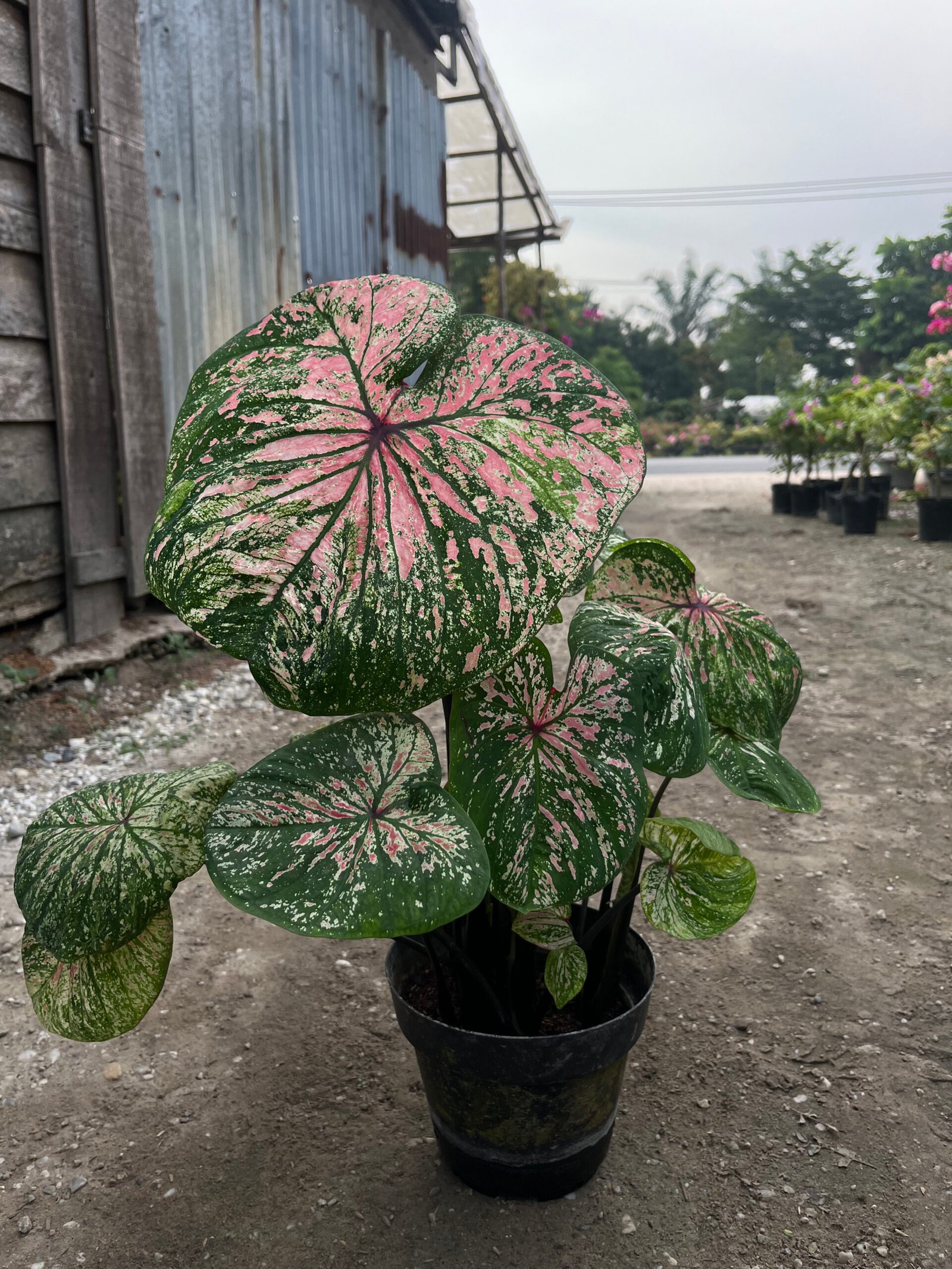
Caladium plants are admired worldwide for their stunning heart-shaped leaves and vibrant combinations of green, white, pink, and red. Unlike many ornamental plants that rely on flowers to attract attention, Caladiums create beauty through their extraordinary foliage, making them one of the most sought-after tropical plants for both indoor and outdoor gardens. Their colorful appearance can instantly brighten any space, whether placed on a shaded patio, inside a modern home, or as part of a lush tropical landscape.
Although Caladium plants are often considered easy to grow, achieving healthy growth and vibrant foliage requires more than occasional watering. Professional growers understand that successful Caladium care involves creating the right environment, maintaining consistent moisture, choosing suitable soil, and providing balanced nutrition throughout the growing season. Small mistakes, such as excessive watering or prolonged exposure to direct sunlight, can quickly affect leaf color, growth, and overall plant health.
One of the reasons Caladiums are loved by collectors is that every new leaf tells a different story. Even plants from the same variety may produce unique patterns and shades as they mature. This natural variation is part of what makes Caladium so fascinating. Instead of expecting every leaf to look identical, experienced growers appreciate the individuality that each plant develops over time. Watching new leaves unfurl is often one of the most rewarding moments for anyone who keeps these tropical beauties.
Learning how to care for Caladium plants like a professional is not about following complicated gardening techniques. It is about understanding the natural conditions in which these plants thrive. Originating from warm and humid tropical regions, Caladiums prefer environments that mimic their native habitat. When growers recreate these conditions by providing filtered light, nutrient-rich soil, and proper watering routines, the plants respond with vigorous growth and increasingly vibrant foliage.
Healthy Caladium plants begin with choosing the right growing location. Bright, indirect sunlight is generally the ideal choice because it provides enough energy for photosynthesis without scorching the delicate leaves. While some varieties can tolerate gentle morning sunlight, prolonged exposure to intense afternoon sun may cause leaf burn, faded colors, and dehydration. Indoor growers often achieve excellent results by placing their Caladiums near east-facing or north-facing windows where natural light remains soft throughout the day.
Soil quality also plays an essential role in long-term success. Professional growers typically use a well-draining potting mix enriched with organic matter to encourage healthy root development while preventing excess water from accumulating around the tubers. Good drainage reduces the risk of root rot, one of the most common problems faced by beginners. Adding materials such as coco peat, compost, or perlite helps improve aeration and creates an environment where roots can expand freely.
Watering is another important factor that requires balance rather than routine. Instead of watering on a fixed schedule, experienced gardeners pay close attention to soil moisture. The surface of the soil should be allowed to dry slightly before watering again, while the deeper layers remain evenly moist. Overwatering is far more damaging than slightly underwatering because constantly saturated soil deprives roots of oxygen and encourages fungal diseases. By observing both the plant and the soil, growers can adjust watering according to seasonal temperatures and humidity levels.
Fertilization should also be approached with moderation. During the active growing season, Caladium plants benefit from a balanced liquid fertilizer applied every few weeks to support continuous leaf production. Excessive fertilizer, however, may cause salt buildup in the soil and damage sensitive roots. Professional growers understand that consistent care is more effective than excessive feeding, allowing plants to develop naturally while maintaining strong, healthy foliage.
Humidity is often overlooked by beginners, yet it significantly influences leaf quality. Because Caladiums are native to tropical forests, they perform best in environments with moderate to high humidity. Indoor gardeners can increase humidity by grouping plants together, using pebble trays filled with water, or placing a humidifier nearby. Maintaining proper humidity helps prevent brown leaf edges and keeps foliage looking fresh and vibrant throughout the growing season.
Finally, patience is perhaps the most valuable skill every Caladium grower can develop. These plants naturally go through periods of active growth and dormancy, and understanding this cycle helps prevent unnecessary concern when leaves begin to fade at the end of the season. With proper care, healthy tubers will produce fresh growth once favorable conditions return, continuing the remarkable journey that makes Caladium one of the world’s most captivating ornamental plants.
Contact Us