

Premium hybrid caladium plants developed for stronger color patterns, unique leaf shapes, and stable plant growth.
Selected for collectors and international plant buyers.
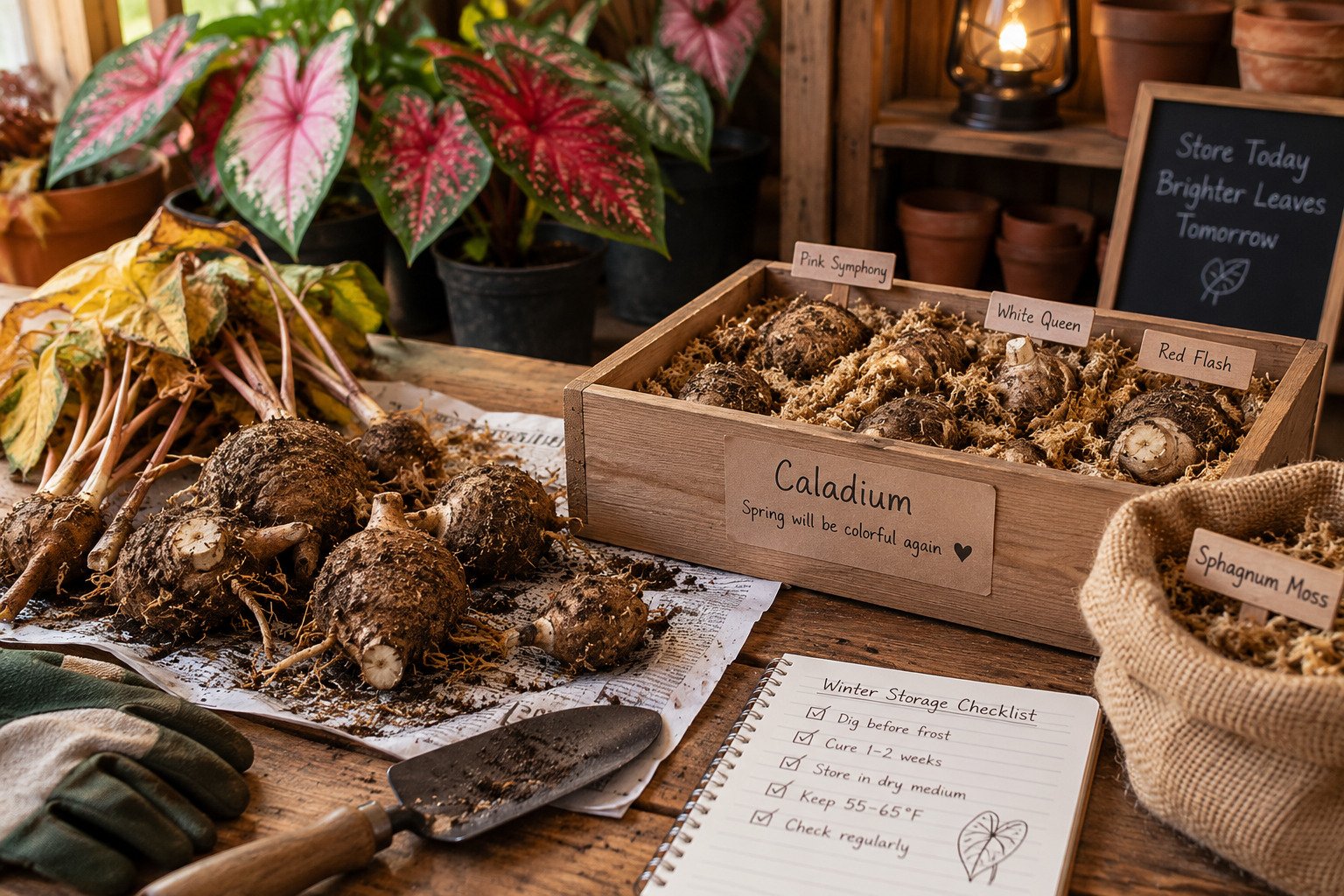
If your caladiums have started to fade as the weather cools, don’t panic — that’s completely normal. Knowing how to store caladium tubers for winter is the difference between losing your collection and welcoming back even bigger, more colorful leaves next spring. This guide walks you through exactly when to dig, how to cure, and where to keep your tubers until it’s time to plant again.
Caladiums are tropical tuberous plants, which means they naturally go dormant once temperatures drop. Instead of dying, the tuber is simply pausing to conserve energy. As a result, the leaves yellow, soften, and eventually collapse — a process we cover in more detail in what happens when caladium leaves die back.
If you live somewhere with cold winters, this rest period is unavoidable. However, the good news is that a healthy tuber can survive several months of dormancy as long as it’s stored correctly.
Timing matters more than most growers expect. Dig up your tubers before the first hard frost, since frost damage can rot the tuber before it even enters storage. Watch for these signs that your caladium is ready to come out of the ground or pot:
According to Mississippi State University Extension, gardeners should dig up their tubers just before the first frost and let the foliage wither naturally rather than pulling it off early.
Curing is the step most beginners skip — and it’s the one that prevents rot. Follow these steps:
Skipping this drying phase is one of the most common reasons stored tubers rot before spring.
Once cured, tubers need a breathable material that absorbs excess moisture without drying them out completely. Good options include:
Layer the tubers so they aren’t touching each other, then label each container by variety — this matters even more if you’re storing collector or rare hybrid caladiums, which we discuss further in understanding caladium varieties and hybrids.
Caladium tubers store best at 55–65°F (13–18°C), in a dark, dry location such as a closet, basement, or garage that doesn’t freeze. Avoid two extremes in particular:
If you’re unsure how cold your winters typically get, the official USDA Plant Hardiness Zone Map is a reliable way to check your zone before deciding whether tubers need to come indoors at all.
You don’t necessarily have to remove your caladiums from their pots. Choose whichever method suits your setup.
If your caladiums are already growing in containers, simply let the foliage die back naturally, then cut the stems to soil level. Move the pot to a dark spot within the temperature range above, and stop watering completely until spring. For more on growing caladiums in containers year-round, see can caladiums grow in pots.
This method is more hands-on but gives you better control, especially useful for collectors managing multiple rare varieties in a small space. Follow the curing steps above, then pack the tubers into your chosen storage material and check on them every few weeks.
Most storage failures come from moisture, not cold alone — so when in doubt, err on the side of drier rather than wetter.
Once the danger of frost has passed and soil temperatures warm consistently, it’s time to bring your tubers back to life. Check our full walkthrough on how to plant caladium bulbs for healthy, strong growth for planting depth and spacing. New growth typically appears within a few weeks; for what to expect during this stage, see understanding the early growth stage of caladium plants.
No. Refrigerators are typically too cold and too humid, which encourages rot rather than safe dormancy.
Most tubers store well for four to six months. Storing them much longer than that risks excessive drying and reduced vigor once replanted.
Generally, no. Dormant tubers should stay dry; occasional light misting is only needed if the storage material feels bone-dry and the tubers look shriveled.
It happens even to experienced growers. Discard any soft or moldy tubers immediately so they don’t affect the healthy ones nearby.
Storing caladium tubers correctly is what turns a one-season plant into a collection that comes back bigger and more colorful every year. If you’d rather start fresh, Greenos Plantcific ships premium Indonesian caladium plants to collectors worldwide, carefully packed and shipped to arrive safely. Browse our full collection at Greenos Plantcific to plan your next planting season.
Contact Us