

Premium hybrid caladium plants developed for stronger color patterns, unique leaf shapes, and stable plant growth.
Selected for collectors and international plant buyers.
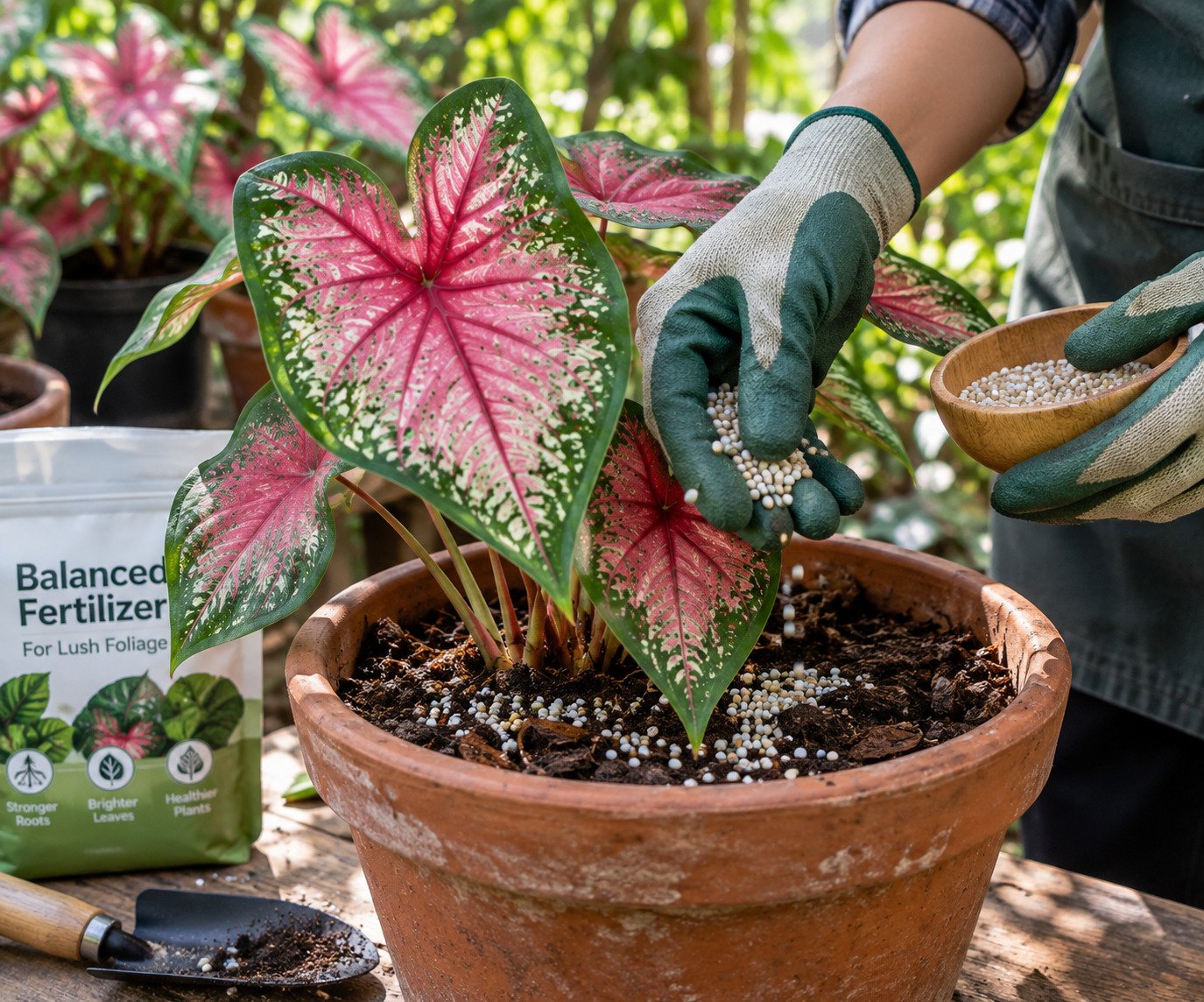
If your caladium leaves look smaller or paler than they should, the fertilizer you’re using — or how often you apply it — is usually the reason why. Choosing the best fertilizer for caladiums isn’t complicated once you understand what these tubers actually need. This guide breaks down the ideal NPK ratio, feeding frequency, and the mistakes that quietly hold back leaf size and color.
Caladiums are grown for their foliage, not flowers, so their nutrient needs are focused on leaf development rather than blooming. Nitrogen in particular drives the size and richness of new leaves, while phosphorus and potassium support overall plant health and resistance to stress. Without consistent feeding, even a healthy tuber tends to produce smaller leaves with duller color, something we cover further in how to keep caladium colors bright and vibrant.
Most growers get good results with a balanced fertilizer, such as a 10-10-10 or 20-20-20 ratio, applied during the active growing season. According to Clemson Cooperative Extension’s Home & Garden Information Center, gardeners who want to avoid excess phosphorus buildup can instead choose a fertilizer such as 15-0-15, which skips phosphorus altogether while still supporting foliage growth.
In short, nitrogen is the nutrient to prioritize if your main goal is larger, more vibrant leaves — a topic we go into further in how to make caladium leaves grow bigger.
Each fertilizer type has a place depending on how much attention you want to give your caladiums:
Beginners often find slow-release granules easiest, since there’s less risk of over-applying.
Caladiums grow actively from spring through late summer, so this is the only window where feeding is necessary. As a general schedule:
Potted caladiums typically need slightly more frequent feeding than those planted in garden beds, since nutrients wash out of containers faster with each watering. If you’re growing yours in pots, pair a lighter, more frequent feeding schedule with the container-specific tips in can caladiums grow in pots.
Both extremes show up in the leaves, so it helps to know what to look for:
If you notice over-fertilizing symptoms, flush the soil thoroughly with plain water and skip the next scheduled feeding.
No — once your caladiums enter dormancy, feeding does more harm than good, since the tuber isn’t actively growing and can’t use the nutrients. If you’re preparing your plants for the off-season, our guide on how to store caladium tubers for winter covers exactly when to stop watering and feeding altogether.
Yes, as long as it’s a balanced formula. Just dilute it slightly weaker than the label suggests for the first few applications to avoid shocking the tuber.
Organic options work well and improve soil health over time, though they typically release nutrients more slowly than synthetic fertilizers.
This is often a sign of too much phosphorus relative to nitrogen, inconsistent feeding intervals, or insufficient light rather than the fertilizer itself.
The right fertilizer routine is one of the simplest ways to unlock the full color and size potential of your caladiums. If you’re ready to expand your collection with healthy, well-developed tubers, explore Greenos Plantcific’s premium Indonesian caladium plants for collectors worldwide, or browse the full collection at Greenos Plantcific.
Contact Us