

Premium hybrid caladium plants developed for stronger color patterns, unique leaf shapes, and stable plant growth.
Selected for collectors and international plant buyers.
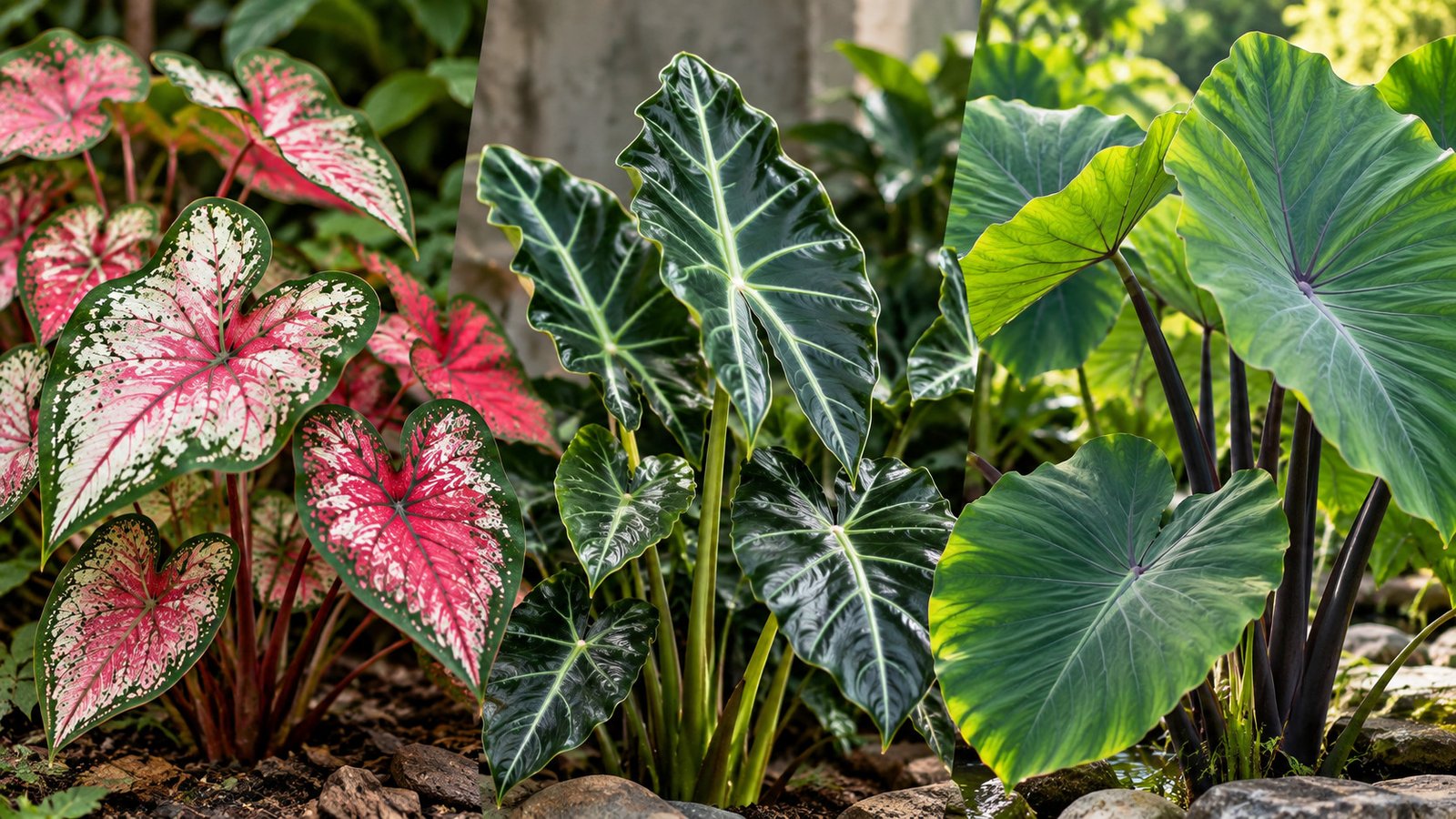
Anyone who’s shopped for tropical foliage plants has probably run into the caladium vs alocasia vs colocasia mix-up at least once. All three are commonly sold as “elephant ears,” share the same plant family, and even look alike to an untrained eye. Fortunately, telling them apart gets much easier once you know exactly what to look for.
Caladium, Alocasia, and Colocasia all belong to the same Araceae plant family and are frequently marketed under the shared nickname “elephant ear,” which is exactly why shoppers mix them up. According to University of Wisconsin-Madison Extension horticulture resources, gardeners are specifically cautioned not to confuse caladiums with these related genera, even though they’re often displayed side by side at nurseries.
The single quickest identifier is where the stem (petiole) meets the leaf, and which way the leaf points:
Once you know this one detail, you can identify most plants in seconds without needing to compare color or size at all.
Caladiums are grown almost entirely for their striking leaf color and pattern rather than sheer size, typically showing combinations of white, pink, and red set against green. For a closer look at what drives this variety, see why do caladiums have so many colors and patterns. They also tend to prefer more shade than Alocasia, going dormant seasonally rather than growing year-round.
Alocasia leaves have a thicker, glossier texture and point upward, giving the plant a bold, architectural look that suits full sun to bright indirect light better than most caladiums tolerate. Unlike caladiums, many Alocasia varieties don’t go fully dormant and are grown as year-round houseplants.
Colocasia, commonly known as taro, is the giant of the three — leaves can grow dramatically larger than either Alocasia or Caladium, and the plant favors consistently moist, even swampy, growing conditions. It also tends to grow faster overall, making it a popular choice for bold landscape statements rather than compact container displays.
| Feature | Caladium | Alocasia | Colocasia |
|---|---|---|---|
| Leaf direction | Outward, heart-shaped | Upward | Downward, drooping |
| Stem attachment | Center of leaf | Edge/notch of leaf | Near center, below notch |
| Main appeal | Color and pattern | Glossy, architectural form | Large scale and texture |
| Light preference | Shade to part shade | Bright light to full sun | Full sun, very moist soil |
| Dormancy | Seasonal, dies back | Often year-round | Can be year-round in warm zones |
Of the three, caladiums are the most shade-loving and the pickiest about avoiding harsh direct sun, as covered in more depth in caladium light requirements. Alocasia tolerates more direct light, and Colocasia often thrives in full sun as long as the soil stays consistently wet — a very different requirement from caladiums, which dislike waterlogged roots.
If you want the widest range of leaf colors and patterns for a shaded patio, pot, or garden bed, caladium is usually the better fit — see how to choose the right caladium for your home and garden for guidance. If you’re after a bold, upright statement plant for bright light instead, Alocasia may suit your space better, while Colocasia fits large, sunny, well-watered landscapes best.
Yes, as long as their individual light and water needs are respected — many gardeners actually combine all three for contrasting textures and leaf shapes.
Yes, “elephant ear” is a shared nickname across several related genera, including Caladium, Alocasia, Colocasia, and Xanthosoma, which is exactly why the confusion happens so often.
Caladiums are often considered the most forgiving for beginners growing in pots, especially in shaded spots, since they tolerate a wider range of indoor and outdoor conditions than Colocasia’s demanding moisture needs.
Now that you can confidently tell a true caladium apart from its Alocasia and Colocasia cousins, explore premium Indonesian caladium plants for collectors worldwide at Greenos Plantcific.
Contact Us