

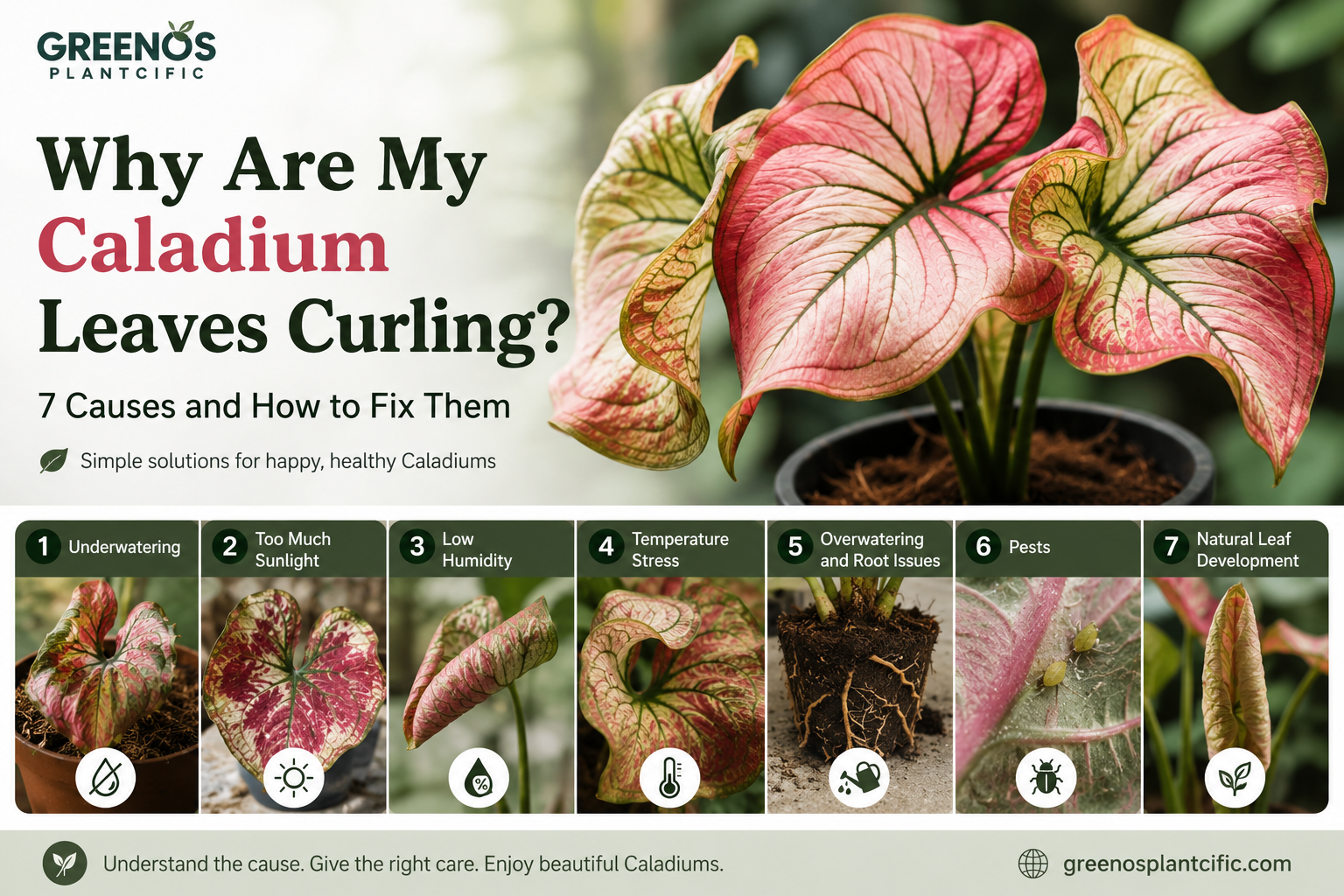
Have you noticed your Caladium leaves starting to curl, fold, or look different from usual? Don’t worry. Caladium leaves curling does not always mean that your plant is dying. In many cases, curled leaves are simply a sign that the plant is reacting to a change in water, light, temperature, humidity, or its growing environment.
Caladiums are tropical plants, so they can be a little sensitive when their growing conditions change. The good news is that once you understand why Caladium leaves curl, it is usually much easier to fix the problem. In this guide, we will look at seven common causes of curling Caladium leaves and what you can do to help your plant grow healthy and produce beautiful foliage again.
One of the most common reasons for Caladium leaves curling is not getting enough water. Caladiums prefer soil that stays consistently moist while they are actively growing. When the soil becomes too dry for too long, the plant can lose moisture faster than it can replace it. As a result, the leaves may begin to curl inward, droop, or develop dry edges.
The easiest way to check is to feel the soil. If the soil feels very dry below the surface and the leaves are soft or curled, your Caladium may need water. Give the plant a thorough watering until excess water begins to drain from the bottom of the pot. After that, allow the excess water to drain completely.
Try not to rely on a strict watering schedule. Your plant may need more or less water depending on the temperature, humidity, pot size, soil, and amount of light it receives. Checking the soil before watering is usually a better approach.
Caladiums enjoy bright light, but strong direct sunlight can be too intense for their delicate leaves. When a Caladium receives too much direct sun, especially during hot afternoon hours, the leaves can lose moisture quickly and start curling. You may also notice faded colors, crispy edges, or small areas of leaf damage.
This can happen when a Caladium is moved from a shaded or protected location into strong sunlight. The plant may not have enough time to adjust to the sudden change in light and heat.
If your Caladium is receiving intense afternoon sunlight, try moving it to a spot with bright, filtered light. Gentle morning sunlight can be beneficial, while protection from harsh afternoon sun can help keep the foliage looking fresh and colorful.
Because Caladiums come from tropical environments, they generally perform better when the surrounding air is not extremely dry. Low humidity can cause the leaves to lose moisture more quickly, which may lead to curling, especially around the edges.
Indoor Caladiums can experience this problem when they are placed near air conditioners, heaters, or strong fans. These conditions can make the air around the plant much drier than the plant prefers.
If you notice curling leaves and your growing area feels very dry, try moving the plant away from direct airflow. Keeping several tropical plants together can also help create a slightly more humid environment. Just make sure there is still enough airflow around the leaves.
Caladiums prefer warm and relatively stable conditions. Sudden changes in temperature can put stress on the plant and may cause its leaves to curl or droop.
For example, moving a Caladium from a warm outdoor area into a heavily air-conditioned room can create a sudden environmental change. Constant cold airflow from an air conditioner can also dry the foliage and make the plant uncomfortable.
Try to keep your Caladium somewhere warm and protected from sudden temperature changes. Avoid placing it directly in front of an air conditioner, heater, or strong draft. If you have recently moved the plant, give it some time to adjust before making more changes.
It is easy to assume that curled leaves always mean the plant needs more water, but that is not necessarily true. Overwatering can also cause Caladium leaves to curl.
When the soil stays wet for too long, the roots may not receive enough oxygen. Poor drainage can make the problem even worse. As the roots become stressed, the plant may show symptoms such as curling leaves, yellowing, drooping, or slow growth.
Before watering your Caladium, check the soil first. If it is still very wet, wait until the plant actually needs more water. Make sure the container has drainage holes and that excess water can escape easily.
A well-draining growing medium is also important. The goal is to keep the soil moist without leaving the roots sitting in water.
Sometimes the problem is not related to watering, sunlight, or temperature. Small pests can also damage Caladium leaves and cause them to curl or develop unusual shapes.
Take a close look at both sides of the leaves, especially around the veins and new growth. Look for tiny insects, webbing, unusual spots, sticky residue, or leaves that appear distorted.
If you find signs of pests, separate the affected plant from other plants if possible. Then identify the pest before choosing a treatment. Regularly checking your Caladiums can help you catch pest problems before they become more serious.
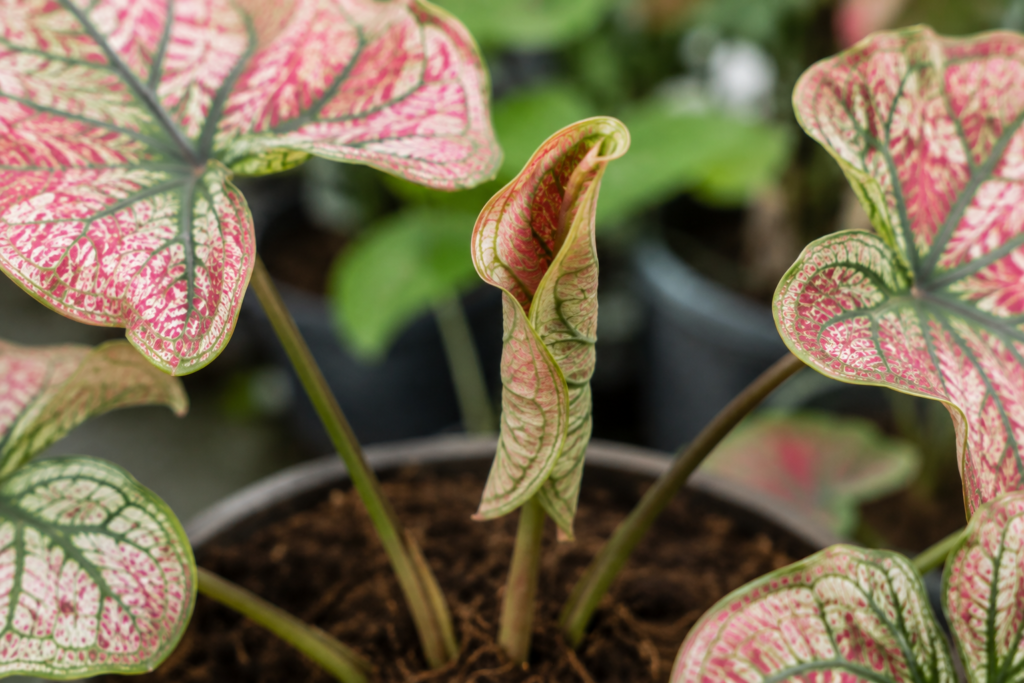
This is an important point because not every curled Caladium leaf is a sign of a problem.
When a new Caladium leaf is developing, it can naturally appear rolled, folded, or tightly curled. As the leaf matures, it will gradually open and reveal its full shape and color.
If the curled leaf is new and the rest of the plant looks healthy, there may be nothing wrong at all. Give it enough moisture, suitable light, warmth, and humidity, then allow the leaf to develop naturally.
Avoid pulling or forcing a new leaf open. Young Caladium leaves are delicate and can easily be damaged while they are still developing.
The best way to understand the problem is to look at the entire plant instead of focusing only on the curled leaf. Start by checking the soil. If it is very dry, underwatering could be the cause. If it stays wet for days, overwatering or poor drainage may be responsible.
Next, look at the light. If the plant is receiving strong direct afternoon sunlight and the leaves have crispy edges, excessive heat or light could be contributing to the problem. If the plant is sitting near an air conditioner or in a very dry room, low humidity or temperature stress may also be involved.
You should also inspect the leaves for pests and think about whether the plant has recently been moved or exposed to a different environment. Looking at several factors together will usually give you a much better idea of what is happening.
The best way to prevent curling leaves is to give your Caladium a stable growing environment. Keep the soil consistently moist without allowing it to remain waterlogged. Provide bright, filtered light and protect the plant from extremely harsh sunlight.
Warm temperatures and reasonable humidity can also help Caladiums maintain healthy foliage. Avoid sudden environmental changes whenever possible, especially when moving plants between indoor and outdoor locations.
Regular observation is one of the simplest ways to keep your Caladium healthy. Check the soil, look at the leaves, inspect new growth, and watch for signs of pests. Small problems are usually much easier to correct when you notice them early.
A single curled leaf is usually not a reason to panic. Caladiums naturally produce new leaves, and some leaves may change as they mature or age.
However, you should pay closer attention if many leaves suddenly begin curling or if curling is accompanied by yellowing, brown spots, severe drooping, damaged roots, pests, or extremely dry or wet soil.
When several symptoms appear together, check the plant’s growing conditions carefully. Start with the basics—water, light, temperature, humidity, drainage, and pests—and make changes based on what you find.
So, why are my Caladium leaves curling? There can be several reasons. Underwatering, excessive sunlight, low humidity, temperature changes, overwatering, pests, and normal new leaf development can all play a role.
Instead of immediately changing everything, take a moment to observe your plant. Check the soil, look at the light, inspect the leaves, and consider whether anything recently changed in its environment. Once you identify the most likely cause, you can make the right adjustment without putting additional stress on the plant.
With the right growing conditions and consistent care, Caladiums can reward you with colorful and healthy tropical foliage. Whether you are growing one Caladium at home or building a larger collection, understanding how the plant responds to its environment is one of the best ways to keep it looking beautiful.