

Premium hybrid caladium plants developed for stronger color patterns, unique leaf shapes, and stable plant growth.
Selected for collectors and international plant buyers.
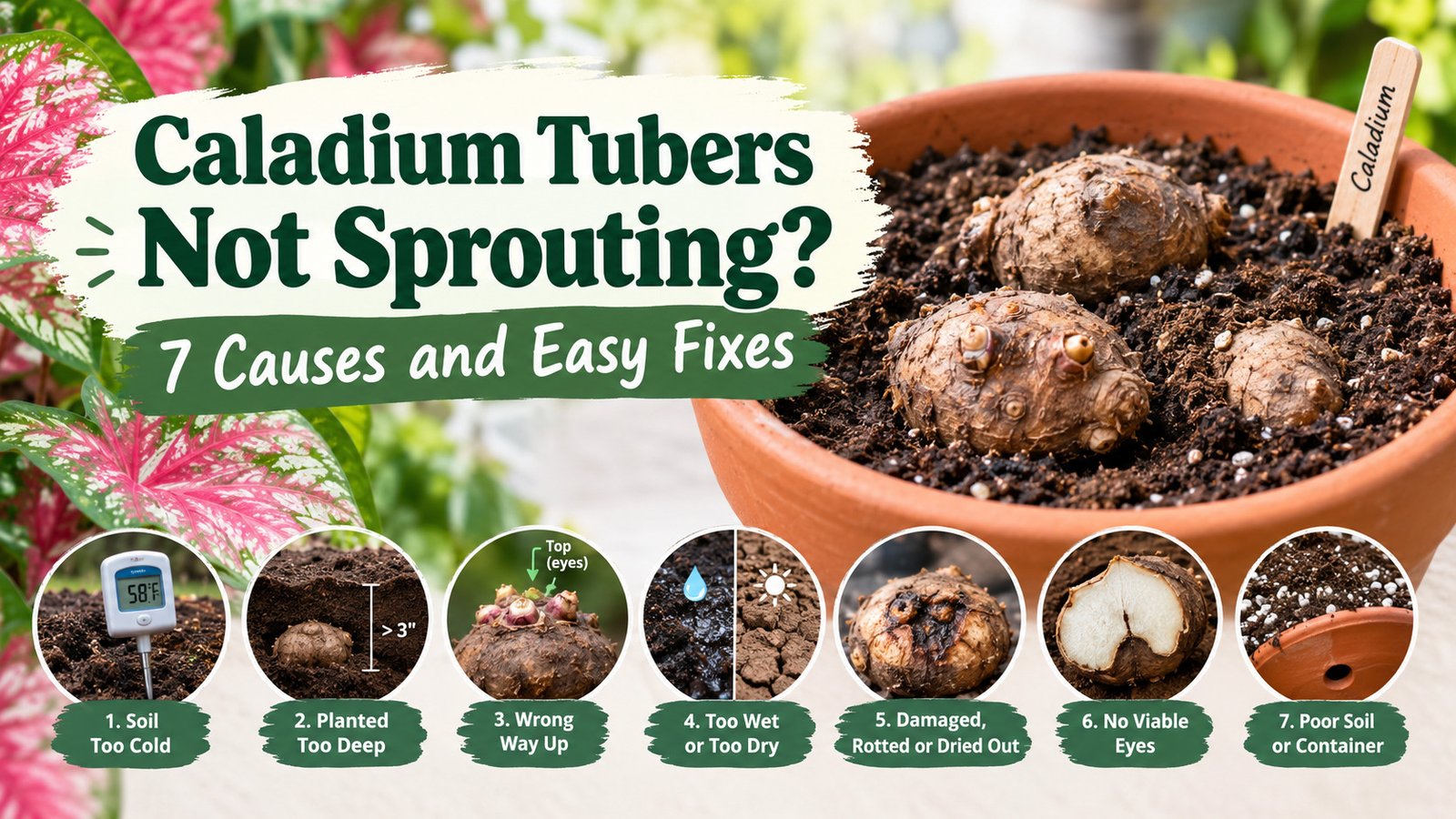
You planted your tubers weeks ago, and nothing has happened. Before you assume the worst, know that caladium tubers not sprouting is one of the most common problems new growers face, and it is usually fixable. In most cases, the cause is simple: temperature, depth, or moisture. This guide walks you through the seven most likely culprits and shows you exactly how to wake your tubers up.
Caladiums are summer plants, so they wake up slowly when conditions are cool. In warm, moist soil, many tubers show their first shoots within a few weeks. However, cooler weather can stretch that timeline considerably, and some tubers need noticeably longer than others. In other words, a little patience is normal, and a tuber that hasn’t emerged after two weeks is not necessarily a lost cause.
This is the number one reason. Longfield Gardens, a well-known bulb supplier, explains that tubers planted into cold soil will not sprout and may rot. They recommend waiting until nights are warm and the soil temperature is at least 65°F before planting outdoors.
Fix: Check the soil with a thermometer rather than guessing from the air temperature. If your climate is cool, start the tubers indoors in pots a few weeks before the outdoor planting date, keeping them warm and barely moist.
Planting too deeply is another frequent mistake. According to Classic Caladiums, a leading U.S. grower, tubers planted too deep may fail to emerge, and the ideal depth is two to three inches. The top layer of soil also warms fastest, which encourages sprouting.
Fix: Gently dig down, lift the tuber, and replant it at the correct depth. For the full method, see how to plant caladium bulbs for healthy and strong growth.
Classic Caladiums also notes that the orientation of the tuber can delay growth. A caladium tuber has a rounded, knobby top where the growing points (eyes) cluster, and a flatter bottom with root scars.
Fix: Plant the knobby side up. If you are unsure which side is which, look for the small pointed buds, which mark the top.
A dormant tuber has no leaves to use up water, so soggy soil quickly leads to rot. On the other hand, bone-dry soil keeps the tuber asleep. Longfield Gardens recommends keeping tubers warm and barely moist while they sprout.
Fix: Water lightly after planting, then keep the soil just damp rather than wet until shoots appear. Our guide on how often to water caladiums explains how to judge moisture correctly.
Sometimes the problem started before planting. Tubers stored in damp conditions can rot, while those kept far too dry can shrivel. A healthy tuber feels firm, whereas a rotted one feels soft, mushy, or hollow.
Fix: Carefully dig up one tuber and inspect it. If it is firm, replant it and wait. If it is mostly mushy, discard it so the rot does not spread. Some growers trim a small soft spot back to firm tissue and let the cut surface dry before replanting, but a largely mushy tuber rarely recovers. To avoid storage damage in future, read how to store caladium tubers for winter, and for rot-related problems see caladium pests and diseases.
Every tuber needs at least one healthy growing point to sprout. Very small pieces, or fragments cut without an eye, may never produce a shoot no matter how well you care for them.
Fix: When dividing tubers, make sure each piece includes at least one eye. For a step-by-step method, see how to propagate caladiums from tubers.
Compacted, heavy, or poorly draining soil can slow sprouting or cause rot, and a pot without drainage holes makes the problem worse.
Fix: Use a light, well-draining mix and a container with drainage holes. Our guide to the best soil mix for caladiums has an easy recipe, and can caladiums grow in pots covers container basics.
If you’ve ruled out the obvious problems, try restarting the tubers indoors:
Indoor starts need warmth far more than light in the first weeks, so don’t worry if the pots sit in a dim but warm spot. Once growth begins, see understanding the early growth stage of caladium plants for what to expect next.
A soft, mushy tuber should be discarded right away. A firm tuber, however, deserves more time. If it stays firm but shows no growth after many weeks of consistently warm, lightly moist conditions, it may simply not be viable. At that point, it is reasonable to replace it rather than keep waiting.
It’s best not to. Cold soil keeps tubers dormant and raises the risk of rot, so wait for warm nights or start them indoors instead.
Not at first. Warmth and gentle moisture matter most during sprouting. Move them into bright, indirect light once shoots appear.
The top is the rounded, knobby side where the eyes cluster. The bottom is flatter and shows small root scars. When in doubt, plant with the buds facing up.
Most sprouting problems come down to warmth, depth, and moisture, and all three are easy to correct once you know what to look for. For more detail, read Longfield Gardens’ guide to growing caladiums or Classic Caladiums’ troubleshooting tips. When you’re ready to start fresh with strong, healthy stock, explore premium Indonesian caladium plants for collectors worldwide at Greenos Plantcific.
Contact Us